“Can You Claim for Pothole Damage in South Africa?”: What Recent South African Case Law Tells Us
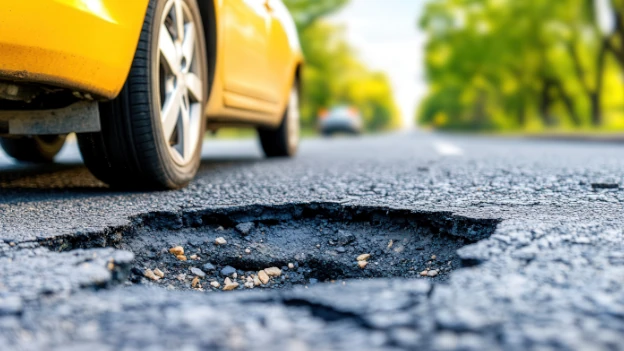
“Can You Claim for Pothole Damage in South Africa?”: What Recent South African Case Law Tells Us
Published on June 9, 2026
Overview
South Africa’s road network has come under increasing pressure in recent years, with deteriorating road surfaces and potholes becoming a common concern for motorists. Apart from causing damage to vehicles, poorly maintained roads may contribute to serious accidents resulting in injury or even loss of life.
The failure to properly maintain road infrastructure can create foreseeable dangers for road users. Large potholes may cause motorists to lose control of their vehicles, swerve unexpectedly, or take evasive action that results in a collision. This raises an important legal question: when harm is caused by potholes, who is responsible?
A recent decision of the High Court in the North West Division, Mahikeng, provides meaningful insight into how courts approach this issue.
Factual Background
The matter of Jacobs v MEC for Public Works and Roads [2024] ZANWHC 73 (12 March 2024) concerned a motor vehicle accident that occurred on a gravel road. The plaintiff lost control of his vehicle after encountering a pothole and subsequently collided with a tree situated alongside the roadway, sustaining significant injuries.
Proceedings were instituted against the Member of the Executive Council responsible for Public Works and Roads. The plaintiff’s case was founded on the contention that the relevant authority had failed to take reasonable steps to maintain the road in a condition that was reasonably safe for public use.
In response, the defendant disputed liability. It was argued that the accident was either solely attributable to the plaintiff or, alternatively, that the plaintiff’s own negligence contributed to the incident. Allegations included excessive speed and a failure to keep a proper lookout.
As the plaintiff was unable to recall the events due to the extent of his injuries, the Court relied heavily on expert reconstruction evidence. The evidence revealed that the road surface was in a poor state, with multiple potholes present. Visibility was compromised by shading from surrounding vegetation, and no warning signs had been installed despite prior complaints regarding the condition of the road.
Decision of the Court
In its assessment, the Court emphasised the duty resting on public authorities to take reasonable steps to ensure that roads are safe for those who use them. It found that the risk posed by deteriorating road conditions, including the formation of potholes, was clearly foreseeable.
The Court accepted the expert evidence linking the pothole to the loss of control of the vehicle and rejected the defendant’s denial of the hazardous condition of the road. It further found that there had been a failure to properly monitor and maintain the roadway over time.
On this basis, the Court held that the defendant’s omission amounted to negligence. The Court ultimately held the MEC liable for the plaintiff’s damages.
Key Takeaways
This judgment highlights several important considerations in claims of this nature. Authorities responsible for road maintenance are required to take reasonable measures to maintain road infrastructure and address known hazards. Where they fail to do so, and that failure causes foreseeable harm, liability may follow.
The concept of foreseeability remains central. If a reasonable authority would have anticipated the risk of harm arising from the condition of a road, steps must be taken to prevent such harm. The presence or absence of warning signs is also a relevant factor in determining negligence.
Although the conduct of the driver is always assessed, it will not necessarily absolve an authority of liability where its failure to act is found to be the primary cause of the incident.
It is also important to remember that liability will depend on the specific facts of each case. Depending on the road involved, responsibility may rest with a municipality, a provincial roads department, SANRAL, or another authority tasked with maintaining the roadway.
What Must Be Proven in a Pothole Claim?
As with any delictual claim, the success of a pothole-related claim will depend on the evidence available. A claimant must generally establish that the authority responsible formaintaining the road acted negligently and that such negligence caused the damage or injury suffered.
Evidence may include photographs of the pothole or road condition, witness statements, police reports, maintenance records, or proof that complaints regarding the road condition had previously been reported but not addressed.
Where personal injuries have been sustained, supporting documentation such as medical records, expert reports, medical invoices, proof of loss of income, and other evidence of financial loss may also be required.
The sooner evidence is gathered following an incident, the better. Road conditions can change quickly, and prompt reporting may assist in preserving important evidence that could later support a claim.
Final Remarks
Cases involving pothole-related damage are inherently fact-specific and require careful consideration of factors such as road conditions, visibility, maintenance history, and driver behaviour. Nonetheless, this decision reinforces the principle that authorities responsible for road maintenance bear a significant responsibility in ensuring the safety of public roads.
Where that responsibility is neglected, and injury or damage results, the courts are prepared to hold the relevant authority accountable.
If you have suffered injuries or financial loss as a result of a pothole-related accident, obtaining legal advice at an early stage can assist in preserving evidence, identifying the potentially liable authority, and assessing the prospects of a successful claim.
Disclaimer: This article is provided for general informational purposes only and does not constitute legal advice. Each matter depends on its own facts and circumstances, and specific legal advice should be obtained in relation to any particular situation.

Onkgopotse Kwape
Candidate Attorney
Why you should choose us
At MW Attorneys we believe that quality of services counts and not quantity. We believe in sincere and continuous communication with our clients and we strive to deliver services of the highest quality, as we have been doing since 1997. We regard our clients as our most important asset!
MW Attorneys has a proven track record since:
1900
